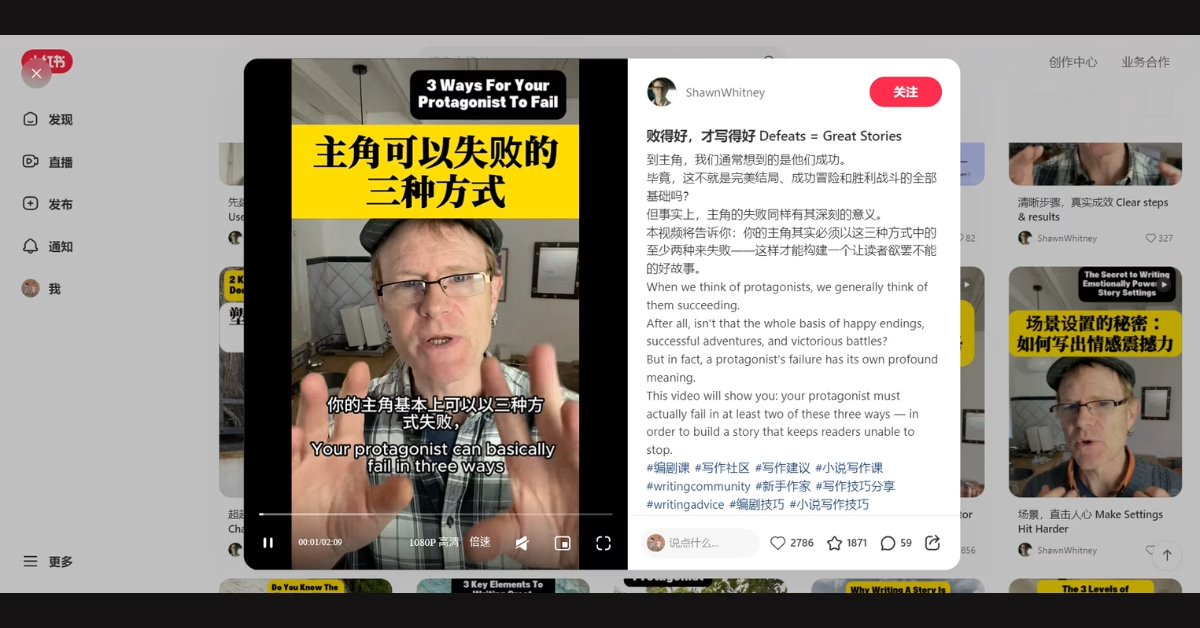
For global experts, the prospect of selling e-books, courses, or masterclasses to 200 million affluent users is enticing. However, once you begin the deep research into the logistics, you will quickly find that the Chinese digital market is not an open door. It is a highly regulated ecosystem with specific technical and legal requirements that can stop a foreign creator in their tracks.
If you are serious about expansion, you must understand the barriers before you invest your time.
The regulatory landscape you need to know:
✚ The ICP hurdle: To host a professional website or storefront that functions properly within mainland China, you typically need an Internet Content Provider (ICP) filing or licence. Any business facilitating transactions or user accounts often falls under these strict regulated categories.
✚ Payment gateway restrictions: While the world uses Stripe or PayPal, China runs on WeChat Pay and Alipay. Foreign individuals cannot easily set up these merchant accounts without a Chinese business license or a local bank account.
✚ Platform verification: To sell directly on platforms like RedNote, you must undergo a rigorous professional account verification. This often requires submitting local business documentation and tax certificates that most foreign experts simply do not have.
The wall of digital friction
Even if you manage to set up an account, the “Foreign Exchange” regulations in China make it incredibly difficult to move your earnings back to your home country. Many creators find themselves with thousands of dollars in a Chinese digital wallet that they cannot legally withdraw or use outside the country.
This technical friction is intentional. It is designed to ensure all commercial activity is tracked and compliant with local laws. For a foreign expert working alone, these restrictions are not just a nuisance—they are a complete roadblock to a scalable business.
How to move forward without the headache
You could spend years trying to set up a Chinese legal entity, or you can partner with someone who has already cleared the path. Navigating these restrictions requires more than just a guide; it requires a partner who understands the bridge between Western intellectual property and Chinese digital compliance.
Don’t let technicalities stop your growth.
If you have the content but are stuck on the logistics, let’s find a way through the digital wall together.